Most children in poverty in Scotland have a parent who works
The most common thing said about poverty is that people should get a job. Most of them already have one.
By Graeme · 31 July 2026 · 4 min read
On this page
Say the word poverty and someone will tell you that people should get a job. It is the oldest answer there is. It is also, for most families in poverty in Scotland, describing something they already did.
75%
of children in poverty in Scotland live in a household where somebody works
Roughly 3 in every 4. Scottish Government, 2022–25.
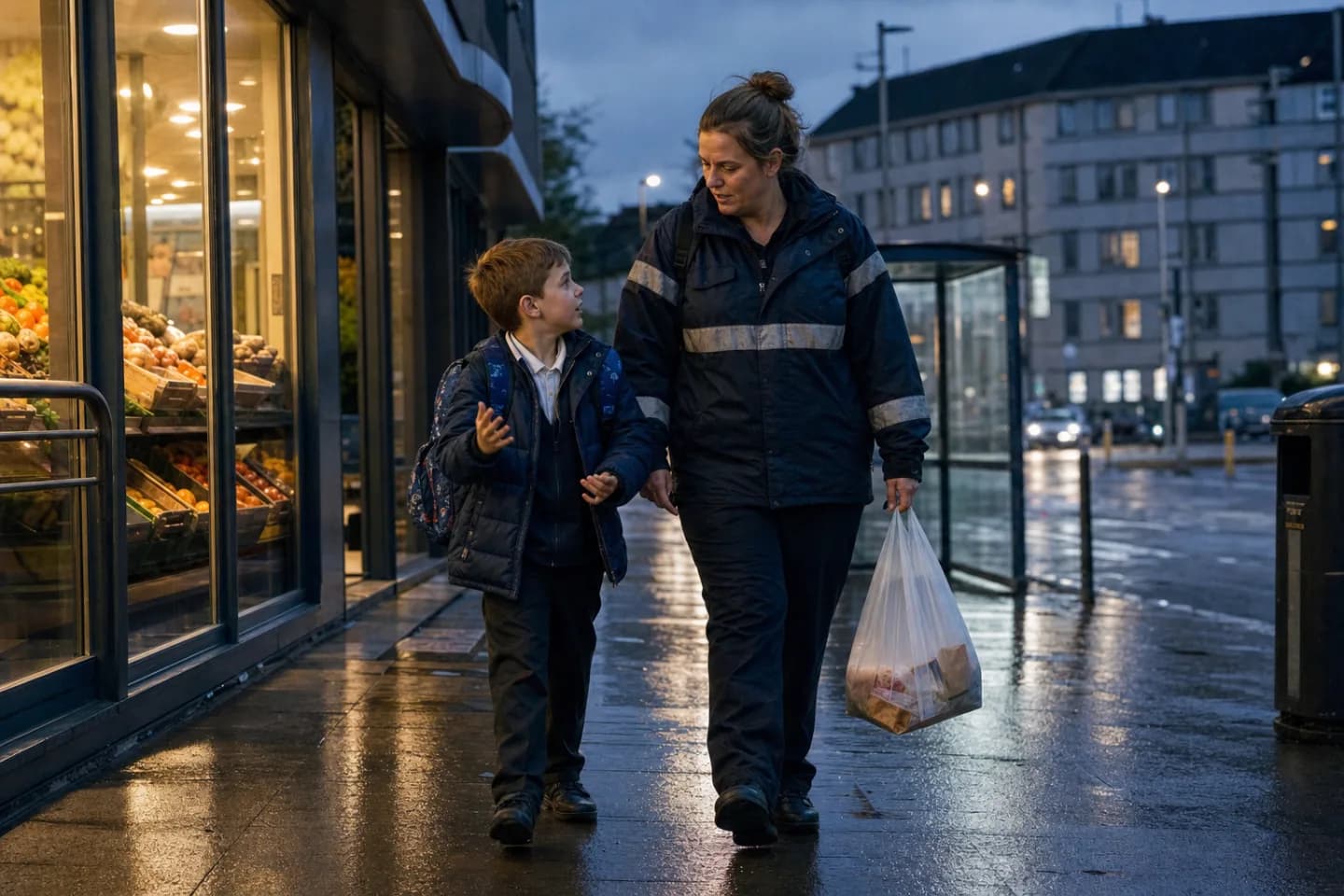
That is the whole argument in one number. Three quarters of the children counted as poor in Scotland have a parent who gets up and goes to work. Not a small minority. The clear majority.
It means the common explanation for poverty, that it is caused by people not working, does not fit the facts. Something else is going on.
So why does the work not fix it?
Three things, and they stack on top of each other.
- Wages have not kept up. A job that covered the bills fifteen years ago may not cover them now. The price of food, energy and rent moved faster than pay did.
- The hours are not always there. Part-time work, short contracts and shifts that change week to week all mean the money changes week to week too. You cannot budget for a wage you cannot predict.
- Housing takes the difference. This is the big one, and it is the reason the official measure works the way it does.
Why housing changes the picture
Poverty in these figures is measured . Rent or mortgage comes off first, and what is left is what counts.
That is deliberate, and it is the fairer way round. Two families can earn exactly the same wage, and the one paying £700 a month in rent has far less to live on than the one paying £300. Measuring before housing would call them equally well off. They are not.
What this means in practice
A pay rise that is swallowed by a rent rise does not move a family out of poverty. On paper they earn more. In the kitchen, nothing changed.
What this changes about the argument
If poverty were mostly about worklessness, the fix would be jobs. Scotland does not have a jobs problem of that kind, Glasgow has more jobs than working-age residents, and it still has the worst child poverty rate in the country.
What moves the number is how much money families are left with: what they earn, what they get in support, and what housing takes. Those are decisions, and they are made by people you can name and write to.
Find out what it looks like where you live
Enter your postcode and see the figure for your own area, then send a ready-written email to the people who decide. It takes about a minute and you do not need to know anything about politics.
See my area and email my MPEvery figure here is published and sourced. You can download the data or read exactly how it was counted.