Poverty in Scotland
The figures, the causes and who can fix it
What this means
Poverty here means : living on less than 60% of the middle UK income once the rent or mortgage is paid.
The figure that surprises people most is that work is not a way out of it for everyone. 75% of children in poverty in Scotland live in a working household.
Scotland, 2022–25
17%
of people in Scotland, 940,000 in total
21%
of children
18%
of working-age adults
13%
of pensioners
Source: Poverty and Income Inequality in Scotland 2022–25. Relative poverty after housing costs.
Start here
Explainer
5 min readWhat poverty actually means
Relative, absolute and persistent poverty are three different things, and the difference changes the number by hundreds of thousands of people.
Explainer
4 min readMost children in poverty have a working parent
The single most common assumption about poverty in Scotland, tested against the official figures.
Six questions
Two minutesGuess the figure
Most people get these wrong, and the direction they get them wrong in is the interesting part.
Local
32 areasPoverty where you live
Child poverty, out-of-work benefits and pay for all 32 council areas, each with its own permanent page.
Four minutes, if you would rather watch it
The whole picture, explained once, with the figures on screen.
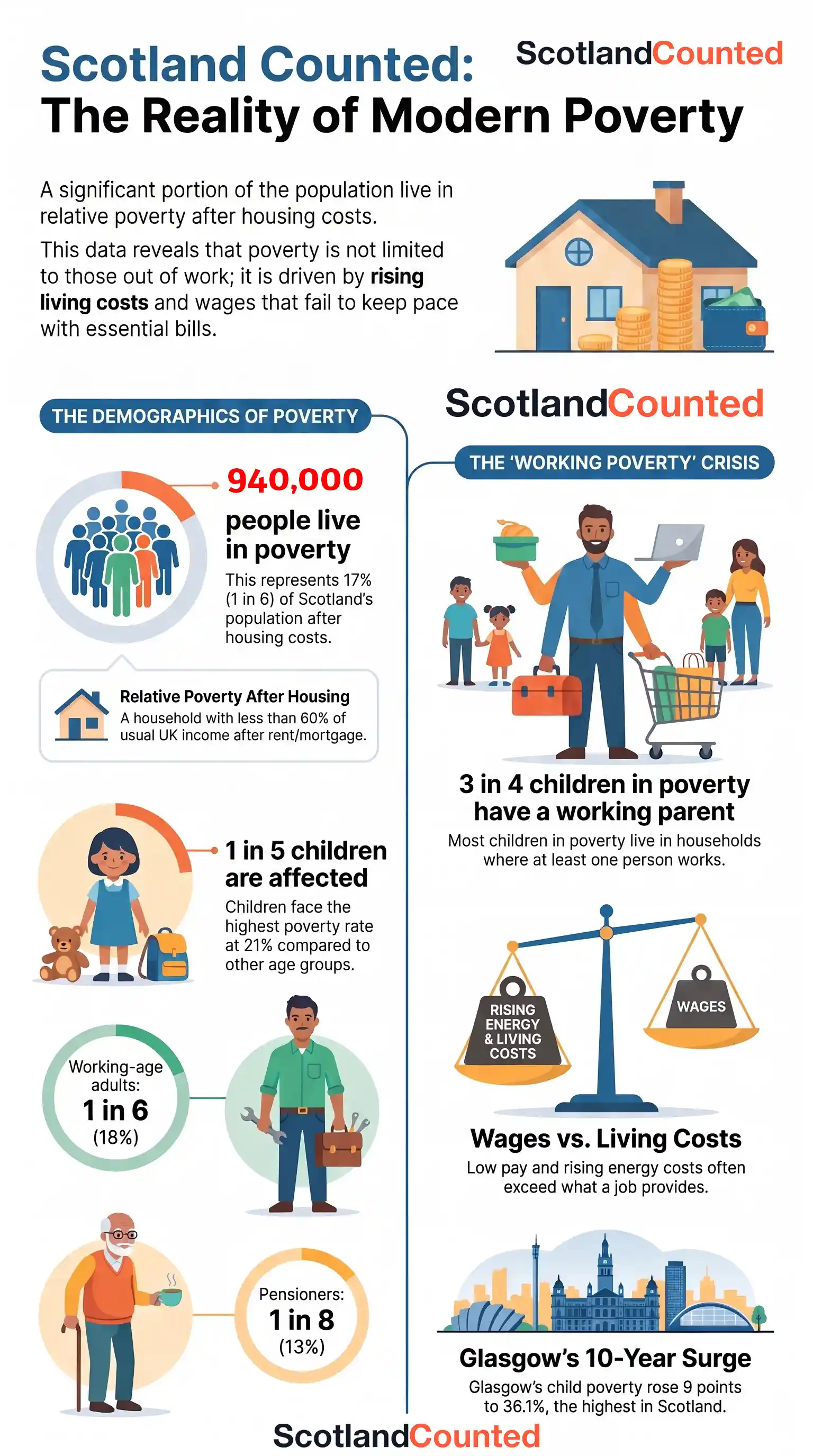
Pass it on
Send this to someone who thinks poverty means not working
Every figure on it is on this site with the organisation that published it. Three in four children in poverty live with someone who works, that one fact changes the argument, and almost nobody knows it.
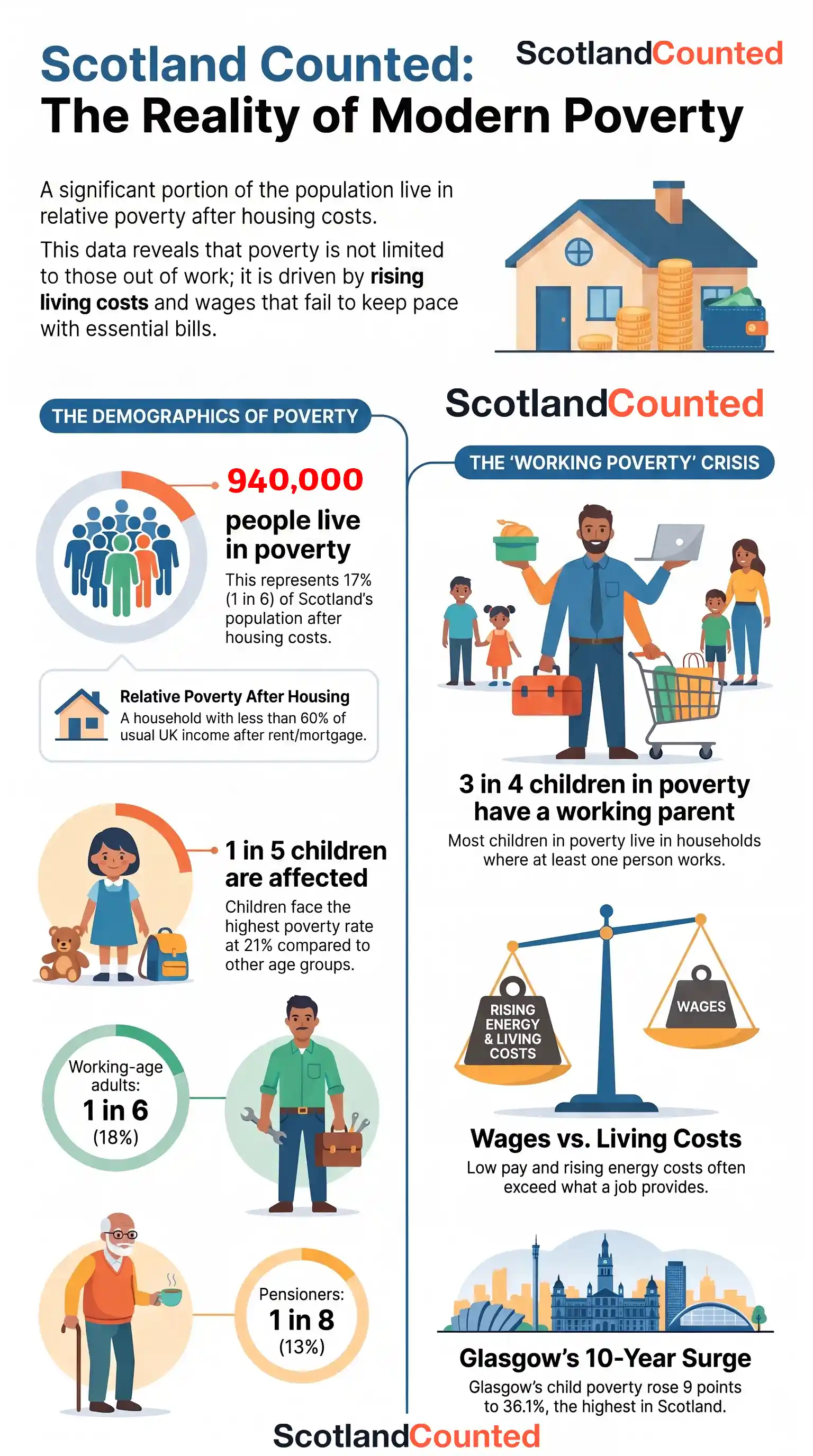
Free to reuse with credit. Made for a phone screen, so it fits a story or a post as it is.
The Glasgow record
Glasgow has the highest child poverty rate of any Scottish council area, and the gap has widened rather than closed. It is the site’s detailed case study because the data goes back furthest there.
What would change it, and who can do it
The levers are real and they are split between three levels of government. Both pages below name which government holds which one.
One email is worth more than one share
The people who set benefit levels, tax bands and council budgets are required to answer their constituents. Find yours and write to them.
One simple next step